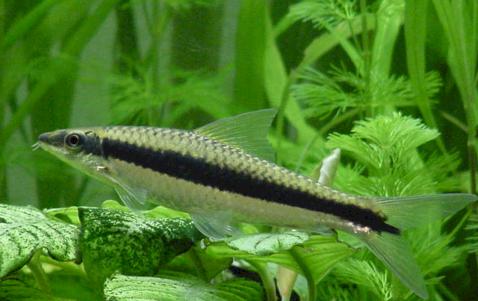
1. Otocinclus affinis (Oto cat)
These little catfish are amazing algae eaters. First, they are relatively small and stay under 2" so they can be used in almost any aquarium size. Second, they aren't aggressive and are actually quite fun to watch, often being compared to little monkeys, hopping around from branch to branch. And finally, they eat lots of algae and won't touch your plants. They love brown algae (diatoms) that is common in newly started tanks and also eat all kinds of soft green algae including green dust algae. The only thing to worry about is that they have enough to eat and that there aren't large enough fish in the tank to see these as a snack (angels and other cichlids have been known to try to eat otos). Keep these guys in groups, give them plenty of algae to eat (or zucchini), and they'll keep your tank free of most algae!

2. Caridina japonica (Amano shrimp)
Made popular by Takashi Amano in his nature aquarium style aquascapes, these shrimp are fairly hardy algae eaters that will eat algae that most other algae eaters leave alone. They eat hair algae and other green algaes and even clean up excess food. Although they won't breed in a freshwater aquarium like other shrimp (they need salt water to develop) they are relatively large and are rarely eaten by most normal community fish. Larger loaches and gouramis may try to make them a meal, so be careful. They aren't aggressive, though have been known to eat fry if they are available. Like other invertebrates, they are extremely sensitive to copper, a common ingredient in fish medications.
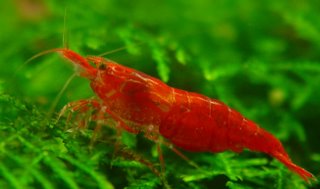
3. Neocaridina denticulata sinensis var "Red" (Cherry Shrimp)
Cherry shrimp are both pretty to look at because of their bright red coloration, and keep your planted tanks sparkling clean! If you ever need anything cleaned of algae, just put it in a tank with a crew of cherries and they'll swarm all over it, eating all the algae! They eat most types of soft algae and won't eat plants. Even better, they'll breed and given the right conditions, you'll always have an algae clean-up crew. However, they are quite small and are sensitive to water conditions (including copper), and so can be eaten by larger fish (or all babies can be eaten by almost any fish) and are best kept alone.

4. Plecostomus (pleco)
Plecos come in all shapes and sizes, and some are better suited for planted tanks than others. Most plecos grow to be over 12" in length when mature and are therefore not a good idea for most normal sized aquariums. On top of that, they often munch on plants once they get large and can even damage acrylic aquariums with their powerful mouths. Therefore, smaller plecos are the only ones that should be considered for a planted aquarium. One of these smaller plecos is the Bristlenose pleco (shown above), which only reaches 4 or 5 inches in length. There is little that can match the appetite of a pleco and they will keep your tank walls crystal clear. They can even scrape off green spot algae from the glass that other algae eaters can't eat. As long as you get the right kind, plecos are unmatched in their algae appetite and are a fairly good algae eater for a larger planted aquarium. They can also be mixed in with larger more aggressive fish, as they have a pair of barbs on their cheeks that can be used in defense and only mainly come out at night.

5. Crossocheilus siamensis (Siamese Algae Eater or SAE)
Siamese Algae Eaters just barely make it onto this list. Aside from being hard to find and having lots of look-a-likes passed off as SAEs, they have a few major benefits, but along with these come major drawbacks. First, they are some of the only fish to eat red algae and black beard algae. They also seem to love hair algae. However, their appetite doesn't always stop with algae. They also eat fine leaved plants including mosses, hairgrass, and mayaca. Their appetite for algae also seems to wane as they get older until they eat very little of it at all (especially when there is other food present). They can also turn aggressive as they get older, bullying other fish in the tank as they reach their maximum size of about 5 to 6 inches in length. However, a hobbyist's arsenal is limited when it comes to red algae, black beard algae, and hair algae, and these can prove a life-saver as long as you don't have any fine-leaved plants or easily stressed fish.