 |
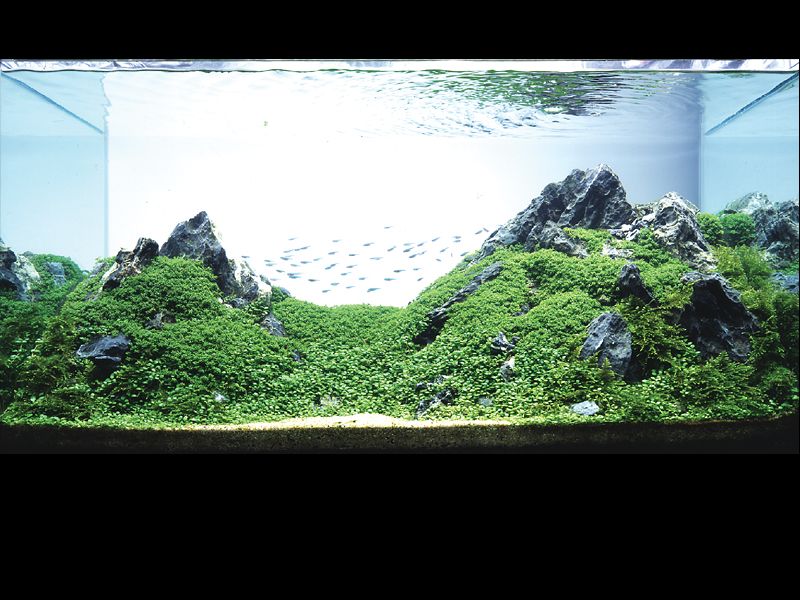
| Beniamino by Alberto Sosa |
Showing posts with label planted aquarium. Show all posts
Showing posts with label planted aquarium. Show all posts
Thursday, August 12, 2010
Alberto Sosa's Beniamino Aquascape

Friday, July 27, 2007
Cooling an Aquarium
 As it is the height of summer here in the northern hemisphere and the temperatures in my tanks can get as high as 85F (30C) I figured a post on cooling an aquarium would be relevant and useful. If you don't have air conditioning in the room where your aquarium is located or in your home at all, these tips can help to reduce the stress on your aquarium.
Just like the sun on a hot summer day, the lighting in your aquarium is probably responsible for most of the heat raising the temperature in your aquarium. With planted aquariums, the lighting often gets very hot and if the temperature of the room where the aquarium is is high as well, this can rapidly warm the water. Therefore, one of the ways to cool your aquarium is to cool your lights. Cooling the aquarium lights also helps to extend the lives of the bulbs, so if your lighting doesn't come with any sort of ventilation fans, consider adding some. They can be purchased at almost any aquarium supply shop or online.
Another way to cool your lights is to raise them up off any sort of canopy you may have. This will improve air flow around them and in turn reduce their temperatures. Also, removing an aquarium lid or canopy can also reduce the temperature in the aquarium through evaporation. As the water evaporates, it cools the remaining water and with the top of the aquarium open, evaporation occurs much more rapidly. The downside to this is you will have to top up your aquarium much more frequently to make up for the increase in evaporation.
 For a simple and cheap way to cool your lights and your aquarium at the same time, try placing a regular household fan next to your aquarium at water level so it is blowing across the top of the water. Or you can get specially designed aquarium cooling fans like the ones above. By moving air across the surface, you are increasing the rate of evaporation and therefore cooling the remaining water. The moving air will also cool the lights. Again, the downside to this approach is watching the water level and topping it off to make up for all that water being lost.
If you have money to spend, the best option for cooling an aquarium is a chiller. These are not cheap and are usually at least $500 but it is basically an air conditioner for your aquarium. Some use electricity and a semiconductor to cool the water and others move the water past coolant. I would only really recommend these if you have money to burn or if you live in an area where the temperature of your tank is consistently pushing 85-90F (30-32C) and you are trying to keep heat sensitive specimens such as shrimp.
A final, and marginally effective method is to do partial water changes with cool water. A word of warning here: do not use very cold water and do not change a lot of the water at once. Large temperature swings will be very stressful on your fish and could end up in illness or death. Instead, change small amounts with slightly cooler water often. Another idea I've seen discussed is to use a small plastic container floated on the surface full of ice. As long as you have good circulation in your aquarium and as long as it isn't too much ice, this should work alright as well. However neither method will bring the temperature down very low without a lot of effort.
Good luck!
Wednesday, January 10, 2007
Benefits of Plants in the Aquarium

While surfing around the other aquarium websites on the internet, most dealing with fish only freshwater aquariums, I noticed that a large part of keeping a fish only aquarium is trying to overcome the drawbacks of not having live plants. It also made me realize how hard it was to actually keep fish when I still had a fish only aquarium. Diseases such as Ich were commonplace, and although the medicine was available to treat the diseases, I still invariably lost a few fish along the way. This never struck me as strange until now. Instead of desperately trying to keep the fish alive, in a planted aquarium the goal shifts to keeping the plants happy. If the plants are happy, the fish thrive. This is due to the immense benefits that keeping live plants in an aquarium can bring, including:
Aeration - Fish only aquariums are often aerated with an airstone in a desperate attempt to keep oxygen levels high so fish can breathe. In a planted aquarium, as in nature, the live plants provide all the oxygen your fish will ever need through photosynthesis. An airstone and air pump (and all the noise and vibration that go along with them) are unnecessary in a planted aquarium.
Filtration - Power filters, sponge filters, and canister filters are the only means of filtration in a fish only aquarium. It's up to these filters to remove all fish waste and waste produced by excess food. This is achieved through mechanical filtration, chemical filtration (via carbon), and biological filtration (via bacteria growing on the filter media). There are many designs of filters out there and some are better than others, but all suffer from one flaw: if not cleaned properly and regularly, their effectiveness drops. In a planted aquarium, on the other hand, only mechanical filtration is truly needed. Plants can handle chemical and biological filtration fairly well. They absorb chemicals that are harmful to fish (in fact they live off of the chemicals produced by fish waste) and provide a perfect medium for beneficial bacteria to grow on. Of course, plants have their limits of filtration as well and most planted aquariums have a back up filter providing mechanical and biological filtration. Chemical filtration in the form of carbon will remove beneficial compounds and fertilizers needed by plants, and is not advised for a planted aquarium.
Protection - In fish only aquariums, the focus is the fish themselves, and their environment can be somewhat neglected. Not having enough protection can cause fish to be stressed and more succeptable to disease. Although artifical decorations and plants can be bought and put in the aquarium to provide protection and cover for fish, they are inferior to real plants in many ways. First, they provide none of the benefits listed so far aside from a location for beneficial bacteria to colonize. Second, they are much more likely to injure fish. Live plants aren't hard and don't have sharp edges like plastic plants can.
Food Source - The only source of food in a fish only aquarium is the owner of the aquarium (aside from algae for algae eaters). That means the fish are entirely dependent on you and the food you give them. If you don't make wise choices and vary their diet, they may not be as healthy and can become more succeptable to disease. Also, if you forget to feed them, they have no alternative food sources. In a planted aquarium, the fish have a choice. Although not all fish will eat plants, most will pick at the leaves and dead or dying plant matter if no other food is available. It also helps to vary their diet. Many fish are omnivorous and need to eat plant material.
Algae Prevention - Algae is often a problem in fish only aquariums, and although keeping algae eaters and scraping the glass with an algae scraper are ways of combatting some algae, other types of algae are more stubborn. Algae occurs because there are nutrients in the water and there is light (even low light). In a planted aquarium, plants can outcompete algae and use up all of the nutrients in the water. Although this can open up a whole other can of worms while you try to get your light levels and nutrient levels right, once you get your planted aquarium balanced, you will most likely never have to clean the glass or pull algae off the gravel again.
And there you have it. These are only the practical benefits I can think of, there are many many more benefits to owning a planted aquarium, and it's easier than you may think. Even just a few floating plants can make a serious impact in the health of your fish and the tank as a whole. So what are you waiting for? Throw out that noisy air pump and dirty airstone, toss the neon pink plastic plants and cheesy castle decoration, and take the plunge into a planted aquarium. Your fish will thank you!
Monday, October 30, 2006
2006 Aqua Design Amano (ADA) Aquascaping Contest Winners (1-10)
Aqua Design Amano (ADA), brainchild of legendary aquascaper Takashi Amano, holds an aquascaping contest each year. This contest is probably the largest event in the planted aquarium community each year and sets the standard for aquarium design. The results of the 2006 contest were released recently, and I figured I'd post 1st-10th place here for inspiration...and to drool over! Enjoy!
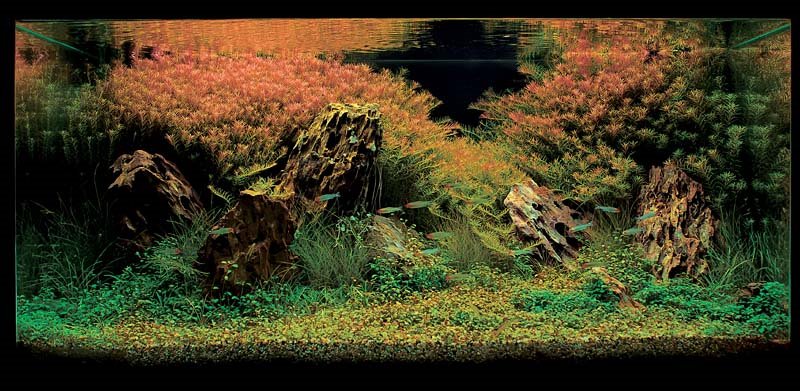 1st Place
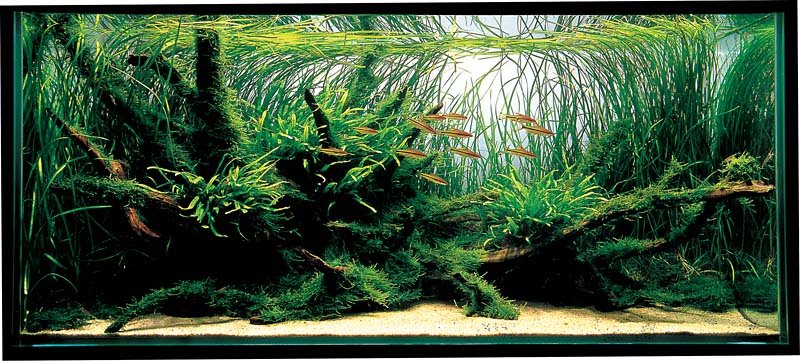 2nd Place
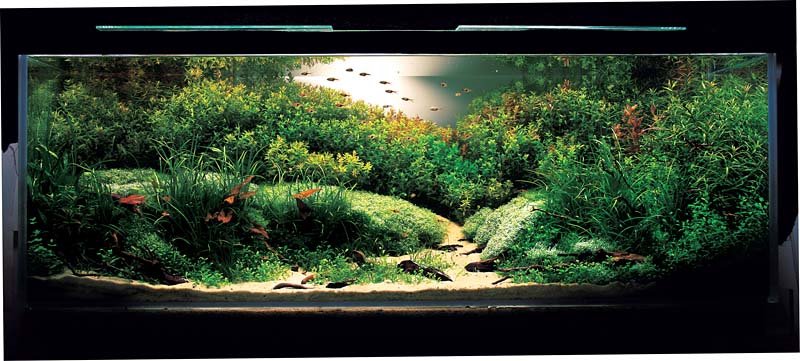 3rd Place
 4th Place
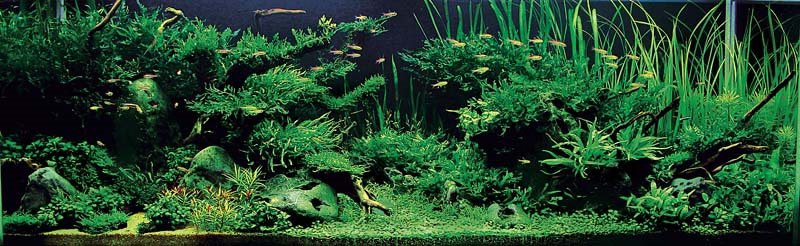 5th Place
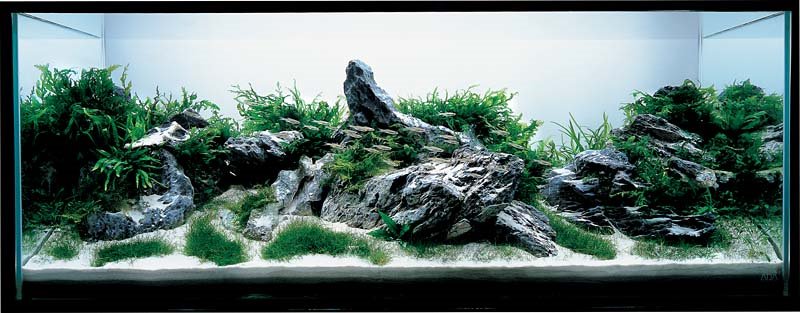 6th Place
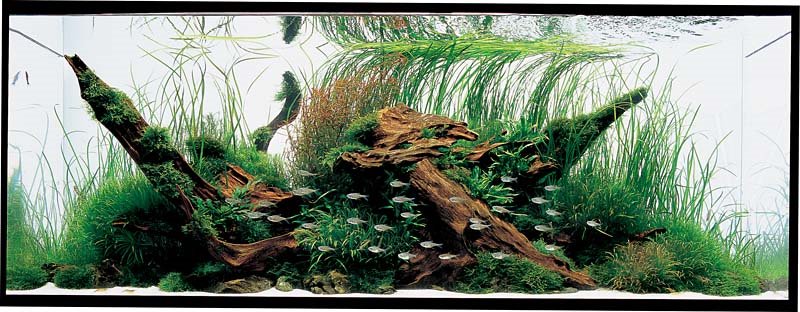 7th Place
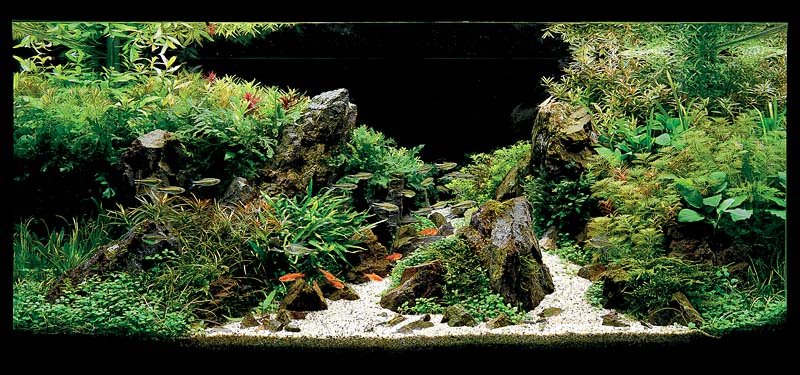 8th Place
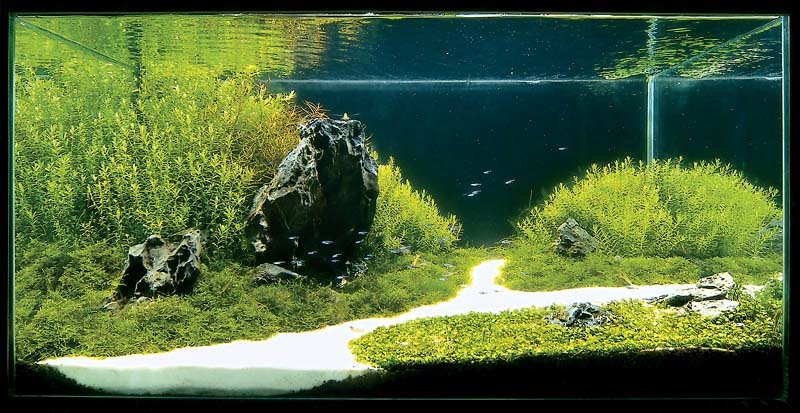 9th Place
 10th Place
Tuesday, October 24, 2006
Top 3 Mistakes When Starting a Planted Aquarium
For those of you starting out in the world of planted aquariums, I've picked my top three mistakes I've seen people make when starting an planted aquarium or converting a fish-only aquarium to include live plants. Consider this a crash-course in starting a planted aquarium. Most of these mistakes lead to the plants dying within a few weeks and, for those of us who don't give up easily, the process is repeated until either our patience or pocket is depleted. Often this is compounded by bad advice given by people at pet stores who often don't know a thing about plants, and even sell plants that aren't true aquatic plants. I'm sure many a potential planted aquarium enthusiast has been lost due to bad advice and these three mistakes. Here they are:
1. But it looks bright! - Often people try to grow plants under the light fixtures that come with an aquarium or come standard in a cheap hood. More than likely, this is a single fluorescent bulb, usually no more than 15 or 20 watts (steer WAY clear of incandescent, they just waste energy, heat your aquarium, and grow algae). The most critical element needed to grow live plants is light. Plants need light to photosynthesize, and without it, they may last a few days or a few weeks on their energy reserves, but eventually they will die. Many people are also mislead by bad advice into believing that the light that is sold with aquariums is adequate. The standard lighting that comes with an aquarium will typically only grow Java Moss and maybe Java Ferns and very poorly at that. If you like ugly, lanky, unhealthy plants go ahead and try it. No matter how bright it may look, it is not enough light. Plants only use specific colors of light, usually in the red and blue ranges. Humans perceive green as brightness. Therefore, what appears bright to us may not actually be helpful to plants. Always choose full spectrum lighting or specific plant growing bulbs, and at least 1.5-2 watts per gallon (WPG) is needed to grow the most basic of aquatic plants in an aquarium. Although this is not set in stone and the watts per gallon rule gets distorted with really small (under 10 gallons) or really big (over 75 gallons) aquariums, it is a good rule of thumb. The following breaks down what ranges qualify as different levels of light:
- 0-1.5 WPG - Extremely low, pretty much nothing will grow
- 1.5-2 WPG - Low, basic hardy aquatic plants will grow slowly
- 2-3 WPG - Medium, most aquatic plants will grow fine
- 3+ WPG - High, almost any aquatic plant can be grown
2. But I thought high light = a beautiful aquarium! - Say you splurge and buy an expensive high output light fixture for your aquarium. Throw some plants in and sit back and watch it grow, right? Wrong. Light in an aquarium is like the gas pedal in a car, the more you push it the faster you go, but the quicker things get out of hand, and when it does get out of hand it gets ugly. Having high light is not always best, especially for someone who's new to planted aquariums. A basic understanding of a plant's metabolic process is required (don't worry, I won't go into details). It takes a bunch of raw materials and energy and outputs a finished product (new growth). Raw materials are fertilizers, chemicals needed for growth, and energy is light. If it runs out of any one of these inputs, the whole thing shuts down, and more importantly, it can only go so fast. So when you throw a plant under high light, it immediately kicks the internal mechanisms into high gear. The plants just shut down when they run out of any one of the many chemicals needed to grow. If you don't fertilize your tank, you will quickly find that all high light does by itself is grow algae, and lots of it. Fast. Real fast. For this reason, if you're just starting out, my advice is to get a medium or low light setup. You don't have to fertilize as much (if at all with a low light setup) and things won't be moving at such a fast pace (and thus get out of control so quickly). It's very hard to recover from a serious algae bloom because once it's taken hold, some types are impossible to remove. I've heard horror stories of people being forced to totally break down their tank because of algae. You've got to stay on top of it from the start.
3. But it was being sold as an aquatic plant! - Many fish stores sell aquatic plants. The problem is, many also sell plants that are not true aquatics. Often these can be found in big-box chain pet stores, where they make up 30-50% of the plants sold. Even at the local fish store, unless there is a dedicated employee who knows his or her facts, non-aquatic plants can be sold to an unsuspecting aquarist. Why these plants are sold as aquatic plants is beyond me, but I doubt it falls far from someone wanting to make a quick buck. They will survive fine underwater for a few months, maybe even a year, but they will steadily decline until they finally die. Since they are not true aquatics, they cannot survive submerged for long periods of time. The only way to avoid these plants is to educate yourself. Certain plants always seem to pop up:



- "Mondo Grass" Ophiopogon japonicus - This is a bushy grass with dark green leaves.
- "Purple Waffle" Hemigraphis colorata - Dark green broad leaves with purple undersides.
- "Aluminum Plant" Pilea cadierei -Dark green leaves with silver markings on the foliage.
As long as you avoid these three mistakes, you should get past the inital transition into the wonderful planted aquarium hobby. Then you can start upping the ante and experimenting with fancy rare plants and high tech setups. It's a steep learning curve, but do your research and you will be rewarded with an aquarium that exploding with life and color that you just can't take your eyes off of!
Subscribe to:
Posts (Atom)
Popular Posts
-
 I was curious as to how the tank above, which took World Ranking 7 in the ADA aquascaping contest this year , created the waterfall illusion...
 -
 When it comes to combating algae in the aquarium, balancing nutrients and water quality will only take you so far. The most powerful tool in...
 -
The second most difficult part about adding a yeast-powered CO2 system to your planted aquarium, after ripping all your hair out trying to f...
-
For those of you starting out in the world of planted aquariums, I've picked my top three mistakes I've seen people make when starti...


Sponsors

